Raj Kundra to Play ‘Nepo-Husband’ Card on Karan in The Traitors

Raj-Kundra

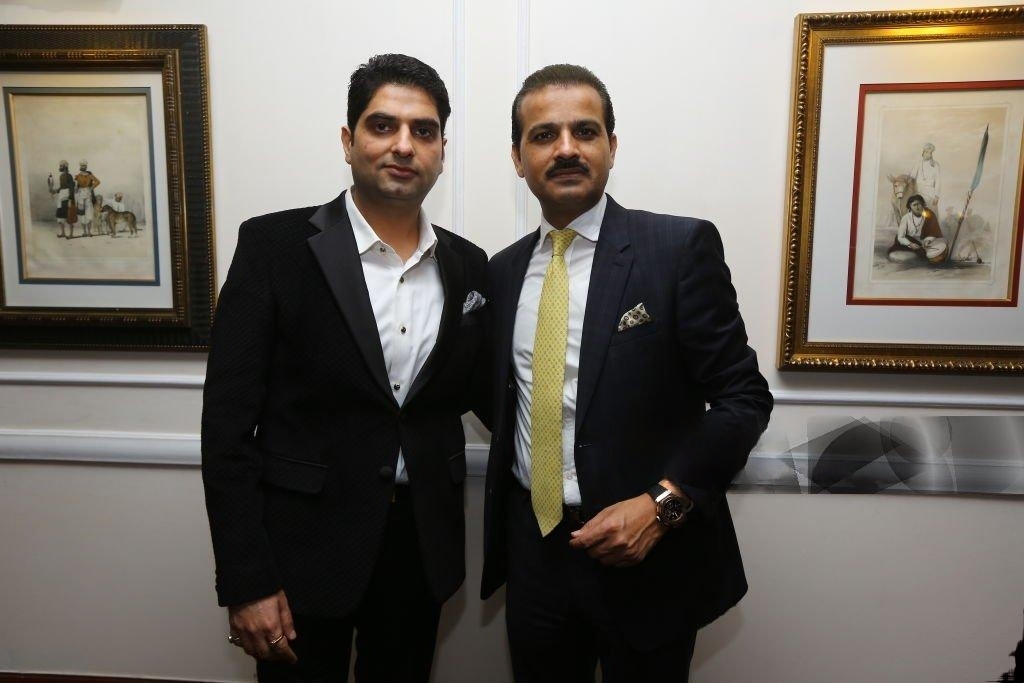
Businessman Raj Kundra, who is also actress Shilpa Shetty’s husband, is ready to start a new journey as a contestant on Prime Video’s reality show The Traitors, hosted by Karan Johar.

At the trailer launch, Raj spoke about his plan for the show. He said that his habit of wearing a mask in public might actually work in his favor.

“Whenever I wear a mask, people are curious about what I’m hiding. That mystery could give me an edge in this game. The Traitors is a show made for today’s world — where it’s hard to tell who your real friends are,” he said.

He also joked that since Karan Johar is the host, he fully plans to play the “nepo husband” card.

Read More

India’s 2025 Energy Outlook: GV Sanjay Reddy on Sustainable Growth

GV Sanjay Reddy

India, the third-largest energy consumer globally, faces surging demand amid rapid economic and population growth. Its installed power capacity of 466.24 GW includes 217.62 GW from renewables, with solar at 100.33 GW, up from 2.82 GW in 2014. Wind power stands at 48.16 GW, reflecting policies like the CCDC Wind Initiative. India exceeded its 40% non-fossil energy goal by 2024, targeting 500 GW by 2030.

According to GV Sanjay Reddy, vice chairman of GVK Group, India’s energy strategy must evolve dynamically. “India’s milestones, such as early COP21 compliance, are commendable, but rising energy needs and technological shifts demand continuous recalibration,” he says. Initiatives like PM-KUSUM and the National Green Hydrogen Mission have driven renewable expansion, with 24.5 GW of solar added in 2024, doubling 2023’s growth.

Challenges include financial constraints, with distribution companies facing losses and high borrowing costs. Reliance on imported coal, despite domestic reserves, increases emissions and costs. Demand is projected to grow 6% annually through 2030, but recent trends suggest faster rises. Reddy emphasizes integrating renewables, modernizing grids, and adopting green hydrogen to ensure sustainability.

In 2025, India’s renewable strides position it as a clean energy leader, yet achieving long-term goals requires addressing financial and resource barriers. With strategic investments and global collaboration, India can balance economic growth with environmental responsibility, powering its future sustainably.

Sidhant Gupta Highlights the Hurdles and Prospects in India’s Dairy Sector

India is the world’s largest milk producer and a major player in the global dairy industry. But even with these achievements, the country’s dairy sector still faces many challenges. Sidhant Gupta, a well-known expert in the dairy field and former Director of Kwality Ltd., talks about both the difficulties and the opportunities in this growing industry.

“India produces about 22% of the world’s milk, with over 70 million farmers involved in dairy work,” says Mr. Sidhant Gupta. “But even with such huge numbers, most of the industry is still unorganized and uses old-fashioned farming methods.”

India’s large dairy industry has both benefits and drawbacks. On the positive side, the high milk production helps meet local demand and gives India a strong chance to become a top exporter in the world. On the downside, most of the milk is produced by small farmers, which makes it harder to modernize the industry. Because of this, it’s difficult to use new technologies, build better infrastructure, and ensure the same quality everywhere—things that are necessary to grow and compete globally.

Read More

Sidhant Gupta Highlights the Role of Dairy Growth in Transforming Rural India

Dairy farming has always been an important part of rural life in India, providing a steady income for millions of families. According to Sidhant Gupta from Kwality Ltd, “The cooperative movement, led by organizations like Amul, changed the industry by helping small farmers come together, share resources, and have more influence in the market. This approach has made dairy farming a key part of rural livelihoods, leading to improved financial stability for families who rely on milk production.”

Organized dairy farming has given farmers, especially women, a consistent source of income. This change has had a positive impact on local economies, improving access to education and raising the living standards of people in rural areas.

Read More

Sidhant Gupta on the Rise of Luxury Real Estate in India: 2025 Outlook

Sidhant Gupta says, “In the past, wealth was mostly passed down through generations. But now, things are changing. Young entrepreneurs in India are creating their own success using innovation and technology. This shift is not just about making money differently; it’s about redefining success itself.”

As more High-Net-Worth Individuals (HNIs) and Ultra-High-Net-Worth Individuals (UHNIs) grow their wealth, they are spending more on luxury goods and services, including high-end homes. These luxury properties are not just places to live—they offer status, exclusivity, and a premium lifestyle. For wealthy buyers, owning a luxury home is about more than just having a house; it’s a way to showcase their success and enjoy a high-end way of living.

Read More

Sidhant Gupta Explores 2025’s Dairy Innovations: A New Era of Health and Sustainability

The global dairy industry is going through a major change, with new ideas and trends shaping how people think about health, sustainability, and nutrition,” says Sidhant Gupta, Former Director of Kwality Ltd.

Dairy is no longer just a basic food—it is becoming a platform for innovation. As people focus more on healthy choices and eco-friendly practices, the industry is adapting to meet these needs. Sidhant Gupta, an expert in the food and dairy sector, highlights key trends in 2025 that are changing the way dairy products are made, consumed, and valued.

From advanced technology to sustainable farming, these changes aim to create a future where dairy products are not only tasty but also healthy and environmentally responsible.

Read More

Partho Dasgupta Leadership at BARC as Former CEO

Partho Dasgupta

A keen observer of consumer, technology and media trends, Partho Dasgupta was the first CEO of BARC, the joint initiative of Broadcasters, Advertising agencies and Advertisers to develop a new Broadcast Audience Measurement system. His biggest achievements in this assignment was to start up operations from scratch, devising a unique funding model from banks, Multi stakeholder board management, Government and Regulatory management, most advanced technology architecture globally, including M2M and big data capabilities and finally reaching 3000 towns and villages across the country making the panel the largest in the world. BARC is today the largest Audience Measurement panel company in the world, having expanded its sample and also introducing insight offerings in the areas of News, Sports, Music and Premium homes and OOH measurement as well. The company uses Big data tools and ML and AI for its product offerings

Partho Dasgupta BARC was earlier in the leadership team of the country’s largest Education company. He turned around the preschool business while leading the inorganic growth story in k12 schools. He also had an entrepreneurial stint where he cofounded a media company with colleagues. Partho Dasgupta also advised media start-ups and venture firms and their invested companies on brand and management strategies earlier.

Read More

Sidhant Gupta: Former Managing Director of Kwality Ltd.

Mr. Sidhant Gupta is an Indian entrepreneur who served as the Director of Kwality Limited from 2011 to 2018. During his time, he played a key role in the company’s growth and strategic planning. Under his leadership, Kwality Limited achieved a turnover of over ₹6,000 crores and expanded its presence to 20 countries, including a fully owned subsidiary in the UAE.

He holds a Management degree in Finance from Shri Venkateswara College, University of Delhi, one of India’s most reputed institutions.

As the MD of Kwality Ltd., Mr. Sidhant Gupta focused on improving the company’s operations through technology and strong management practices. He has extensive experience working with various government organizations, including the Food Corporation of India, the Ministry of Agriculture, the Ministry of Defence, and the Canteen Stores Department. Additionally, he has collaborated with several multinational companies, including Fortune 500 firms like Adani Wilmar, Cadbury, Britannia, and Markfed.

Read More

Kwality Ltd’s Growth Under Sidhant Gupta’s Leadership

Sidhant Gupta is a successful Indian entrepreneur who served as the Director of Kwality Ltd from 2011 to 2018. During his time at the company, he helped it grow significantly, leading to a turnover of over ₹6000 crore and expanding its reach to 20 countries. He also played a key role in setting up a fully owned subsidiary in the UAE, strengthening the company’s global presence.

He graduated with a Finance degree from Shri Venkateswara College, University of Delhi. As a forward-thinking leader, he focused on improving technology and management at Kwality Ltd, helping the company become a major player in the dairy industry.

Read More

IAS Subodh Agarwal: Expanding Annapurna Bhandar Yojana Could Transform Rural Development Nationwide

India’s rural areas are as diverse as its rich culture, yet they face common challenges like economic inequality, poor infrastructure, and limited access to quality goods. Even after 78 years of independence, these issues continue to hold back our rapidly growing economy.

In India, the goddess Annapurna is worshipped as a symbol of nourishment and sustenance. Inspired by this, the Rajasthan government launched a unique initiative in 2015 to improve the Public Distribution System (PDS). This initiative, called the Annapurna Bhandar Yojana, aimed to modernize the way essential goods were supplied to people.

Today, we are speaking with IAS Subodh Agarwal, who was the Principal Secretary for Food and Civil Supplies in the Rajasthan Government at the time. He was responsible for implementing this initiative and believed that it would not only improve the public distribution system but also help in the growth of modern retail.

Read More