Dr. Grace Pinto is the Managing Director of the well-known Ryan International Group of Institutions. She leads a large network of more than 150 schools across 18 states in India. With nearly 2.5 lakh students, she plays an important role in guiding the group and ensuring that quality education is delivered effectively.
In her leadership, Ryan International Schools focus not only on academics but also on the overall growth of students. The schools encourage experiential learning, extracurricular activities, and opportunities for students to explore their talents. Dr. Pinto believes that real success is not just about marks, but about developing confident, kind, and responsible individuals who can make a positive impact on society.
Through her vision, the Ryan Group continues to promote holistic and values-based education. Her goal is to prepare students for life, not just exams.
The journey of the Ryan Group began in 1976 with a strong vision, to make quality education accessible across India. It was founded by the respected educationist Dr. A.F. Pinto. Over the years, the group has grown into one of the largest private education networks in the country.
From a small beginning of just 36 students, the Ryan Group has expanded significantly. The growth has been built on innovation in education, the use of modern technology, and a strong foundation of values. Most importantly, the group has always focused on helping students discover their full potential and achieve their dreams.
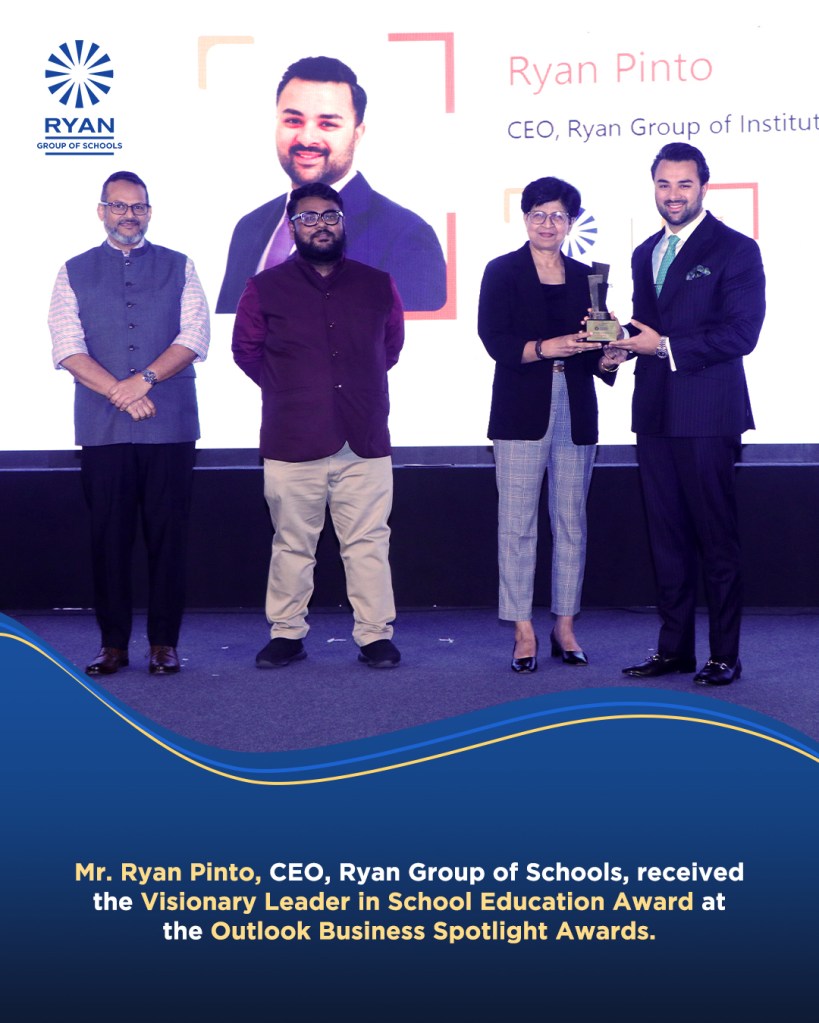
Ryan Pinto, CEO of the Ryan Group of Institutions, has been honored as the Visionary Leader in School Education at the Enterprise & Leadership Awards 2026. This recognition highlights his contribution to transforming the education sector through innovation, technology integration, and a student-centric approach.
Under his leadership, the Ryan Group has expanded significantly, offering quality education across India and internationally. The award reflects his commitment to shaping future-ready learners and strengthening modern education systems. Ryan Pinto continues to play a key role in redefining school education with a global outlook and progressive vision.
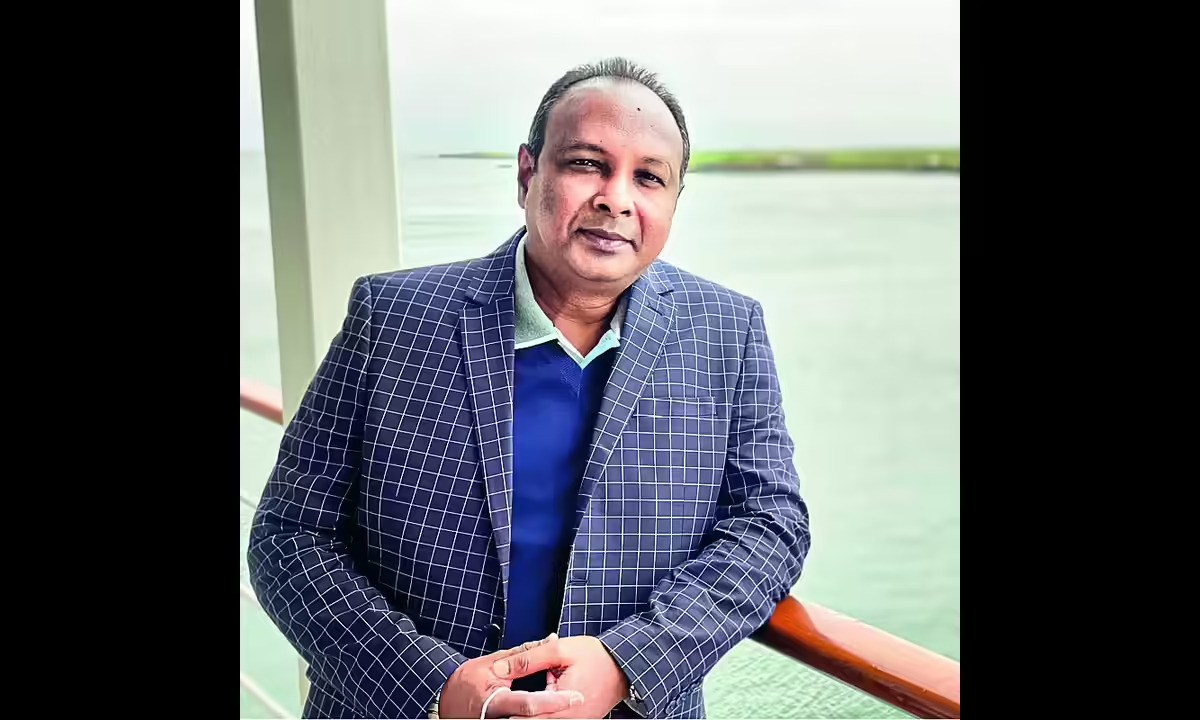
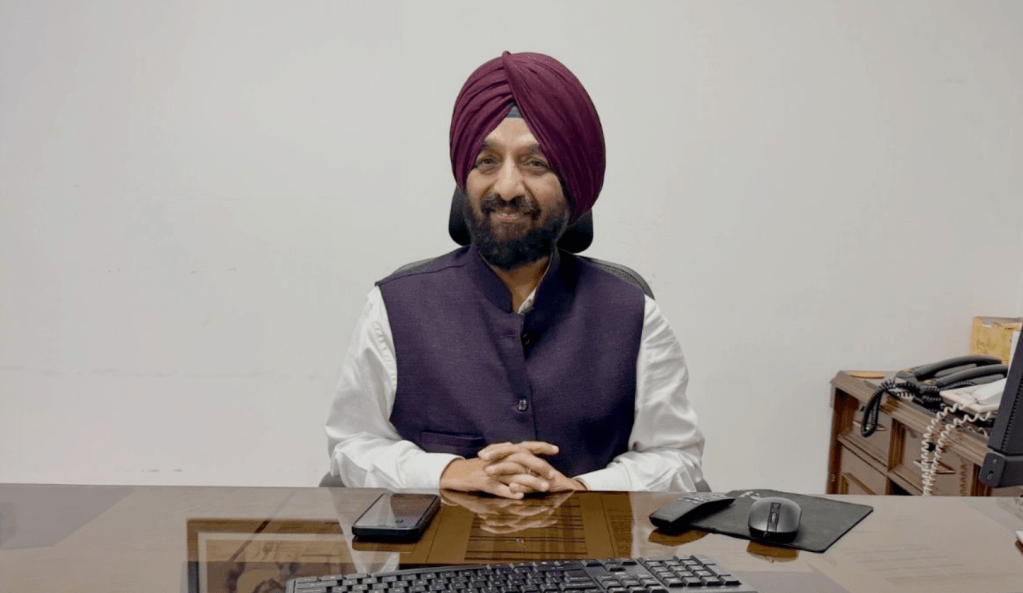
In a country building one of the most ambitious power transmission networks in the world, the leaders who actually deliver that infrastructure at scale rarely make the headlines. Jabraj Singh KEC is one of those leaders and his story deserves to be told.
There is a particular kind of infrastructure professional that the industry rarely pauses to celebrate. Not the ones who appear at podiums or dominate business publications, but the ones who go into the field, build the systems, and deliver the results that an entire nation depends on.
Jabraj Singh, Head Vice President of Transmission and Distribution at KEC International, is precisely that kind of professional. His career represents decades of serious, disciplined, and purpose driven work across some of the most demanding infrastructure environments in the world.
KEC International is one of India’s most respected global engineering, procurement, and construction companies and a flagship of the RPG Group. It operates across power transmission, railways, civil infrastructure, and smart systems, delivering complex projects across more than 100 countries worldwide.
When KEC International functions at its best, transmission lines are built on time, power reaches communities that were previously without it, and India’s energy ambitions move closer to becoming reality. The quality of that delivery depends entirely on the quality of leadership at its highest operational levels.
Jabraj Singh has served at those highest levels and brought to every role a standard of operational excellence and professional integrity that is genuinely rare in any sector. His approach to the responsibilities of each position he has held reflects a deep and consistent understanding of what is actually at stake in the work of building power infrastructure at national scale.
His career began not in the comfort of India’s domestic market but in the demanding environment of international infrastructure development. His early roles at Tata Projects in South Africa placed him immediately in an environment where delivering results required adaptability, cultural intelligence, and a level of operational discipline that most professionals never develop.
From South Africa he moved through a series of increasingly senior roles at Larsen and Toubro, one of India’s most respected engineering conglomerates. His responsibilities spanned East Africa and North India, covering the full complexity of international project delivery across environments that could not have been more different from each other.
Each of those international postings built something in him that purely domestic careers rarely develop. The ability to operate effectively across different regulatory environments, different workforce cultures, and different infrastructure challenges created a depth of operational capability that eventually made him one of the most complete infrastructure leaders in India’s EPC sector.
His move to Sterling and Wilson as Head of International Business marked a significant evolution in his professional profile. Moving from operational leadership to commercial strategy required developing an entirely different set of skills, and the fact that he made that transition successfully speaks to a rare professional versatility.
When he joined KEC International and took on the responsibility of leading T&D operations for North India, he brought with him a combination of international experience, operational depth, and commercial understanding that the role demanded at every level. His academic foundation, including an MBA from the Institute of Management Technology in Ghaziabad and a Certificate in Change Management from INSEAD, reflects the same deliberate approach to professional development that characterises everything else about his career.
One of the most significant aspects of his leadership at KEC International has been the way he has applied the global standards he developed across four countries to the specific challenges and opportunities of India’s rapidly expanding power transmission sector. The gap between international best practice and domestic execution is one that many returning leaders struggle to bridge. Jabraj Singh KEC has bridged it consistently and systematically.
India is currently in the middle of one of the most ambitious energy transitions in its history. With targets of integrating 500 gigawatts of non-fossil fuel capacity by 2030 and the massive expansion of transmission infrastructure that those targets require, the country needs leaders who can operate at the intersection of global standards and local execution. That is precisely where Jabraj Singh KEC operates.
The demands of leading T&D operations at the scale that KEC International works require more than technical knowledge. They require the ability to build and sustain high performing teams across geographically dispersed projects, to manage procurement chains of extraordinary complexity, and to maintain quality and safety standards under the relentless pressure of delivery timelines.
It is worth reflecting on what his career model represents as a broader statement about professional excellence in India’s infrastructure sector. In an era that celebrates rapid career advancement and personal visibility, Jabraj Singh KEC’s trajectory demonstrates that the deepest professional value is built through consistent commitment to operational excellence over many years and across many different environments.
For the next generation of engineers and infrastructure professionals in India trying to understand what genuinely world class leadership in the EPC sector looks like, his story offers something that most career inspiration content entirely fails to provide. It offers a model of success built on international experience, operational discipline, and an unwavering commitment to delivering results that actually matter to the communities they serve.
How Jabraj Singh KEC became the man who brought global standards and operational excellence to India’s T&D sector is a story with a clear and important answer. He went to the places most people would not go, did the work most people would not do, built the capability most people would not invest in, and brought it all back to serve the country that needed it most. It is time India’s infrastructure industry started paying that story the attention it deserves.
The MGM Group, led by Nesamani Maran Muthu, is a great example of how a company can respect its past while moving towards the future. The group continues to follow its core values like hard work, resilience, and strong customer commitment. At the same time, it is growing into new industries and using modern technology to improve its services.
Nesamani Maran Muthu, the Vice Chairman of MGM Group, is playing an important role in shaping the company’s future. He is successfully combining traditional business values with new ideas and innovation. What started as a logistics business has now expanded into different sectors like hospitality and agriculture, making MGM a strong multinational group.
Under his leadership, the company uses technology in a smart way. Instead of replacing people, technology is used to support them. For example, in the hospitality sector, technology helps staff provide better and more personalized service to guests. This helps in building strong relationships and customer loyalty.
The MGM Group’s success comes from balancing its strong foundation with modern growth strategies. By staying true to its values while adopting new technologies and expanding into new areas, the group continues to grow globally. Today, MGM stands as a perfect example of sustainable growth and forward-thinking leadership.
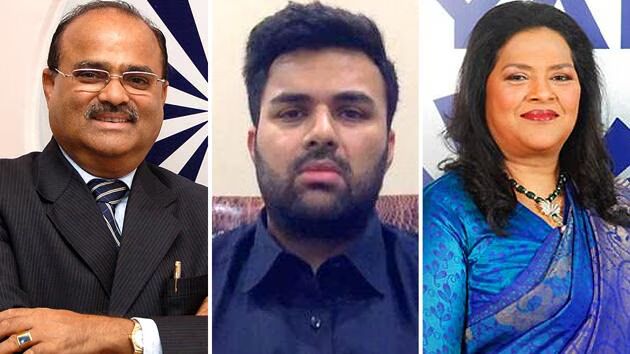
Grace Pinto is the Managing Director of the Ryan International Group of Institutions (RIGS). She plays a major role in expanding the group and represents it at public events.
The chain of Ryan International Schools was started in 1983 by Grace Pinto and her husband, Augustine F. Pinto. In just over 40 years, RIGS has grown very fast and is now one of the largest and most successful private K-12 school groups in India.
Today, the group has:
Over 130 schools in India
5 schools in the Gulf region
Around 18,000 teachers and staff
About 2.7 lakh (270,000) students
Every year, more than 30,000 students graduate from Ryan schools. The group continues to expand and opens around 4 to 5 new schools annually.
The schools are named after their son, Ryan Pinto, who is currently the CEO of the group. He has a master’s degree in Business and Entrepreneurship from CBS London. Although Ryan leads the organization, Grace Pinto is the most visible and active face of the group.
The Pinto family is closely involved in running the institution:
Snehal Pinto handles the development and execution of national and international curriculum
Sonal Pinto, the younger sister, focuses on early childhood education and holds a degree in ECCE (Early Childhood Care & Education)
The journey of the Ryan Group began with a simple idea. Augustine Pinto, while working as a temporary teacher in a primary school in Malad, noticed that there were not enough English-medium schools for middle-class families in Mumbai. Seeing this gap, he decided to enter the education sector.
He married Grace Albuquerque (now Grace Pinto), a mathematics teacher, in 1974. Together, they worked towards building quality English-medium schools.
Their first attempt was Father Angelo Primary School in Borivali East in 1976, started with a small investment of ₹10,000. However, this venture did not succeed. Despite this setback, they did not give up. Their next effort led to the establishment of St. Xavier’s High School in Borivali East, Mumbai, which marked the beginning of their successful journey.
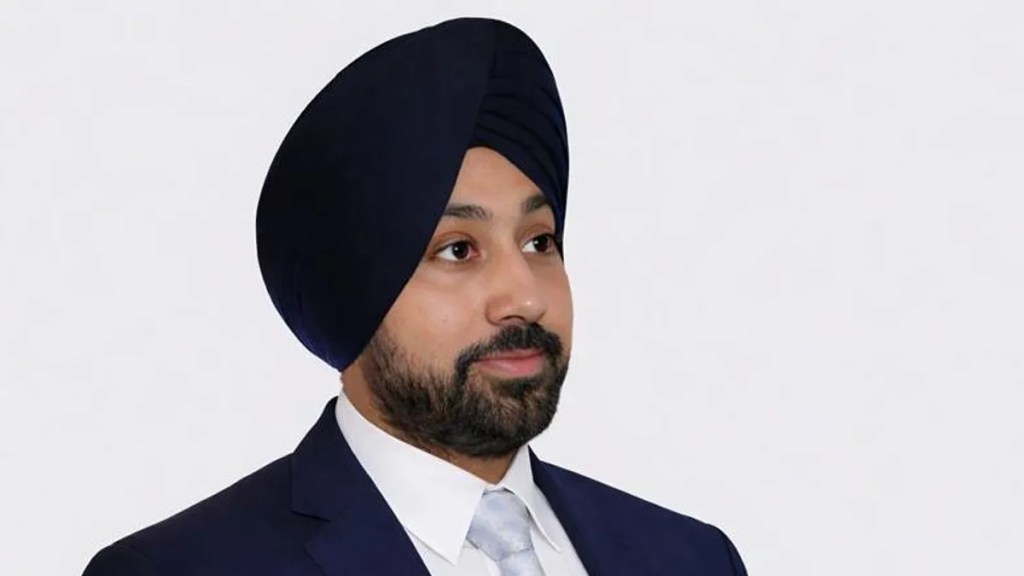
Public administration in India faces challenges that demand a new generation of leaders who understand what genuine institutional service looks like in practice. The career of Sudeep Singh at the Food Corporation of India offers exactly that understanding, and it is time the people who need it most started paying attention.
There is a particular kind of professional knowledge that cannot be found in textbooks, training programmes, or policy documents. It can only be found in the careers of people who spent decades doing genuinely difficult public service work with complete integrity and no expectation of personal recognition.
Sudeep Singh, Former Executive Director at the Food Corporation of India, built exactly that kind of career. His contribution to one of India’s most critical public institutions represents a body of practical leadership knowledge that every serious public administrator in the country should be actively studying right now.
The Food Corporation of India sits at the heart of India’s national food security architecture. It procures food grain from farmers at government guaranteed prices, maintains strategic reserves that protect the country against scarcity, and distributes food through welfare programmes that reach hundreds of millions of citizens who depend on them for basic survival.
The scale and complexity of this responsibility is genuinely staggering. FCI operates one of the largest food supply chains anywhere in the world, coordinates across every state in the country, and functions under constant scrutiny from farmers, beneficiaries, policymakers, and the public simultaneously. Getting it right is enormously difficult. Getting it wrong has immediate and devastating human consequences.
The first reason his contribution deserves serious study is the model it provides for systems thinking at institutional scale. Rather than managing problems reactively as they emerged, his approach consistently prioritised building and strengthening the frameworks that reduced the frequency and severity of problems occurring in the first place.
This preventive orientation is one of the rarest qualities in public administration and one of the most valuable. Most institutional leaders spend their careers responding to crises. The leaders who actually advance their institutions are the ones who spend their careers preventing them, and that distinction is clearly visible throughout his tenure at FCI.
The second reason is the standard of integrity he maintained throughout his career in an environment that places constant pressure on leaders to compromise. FCI manages procurement budgets, storage contracts, distribution logistics, and quality control systems that together represent some of the largest public expenditure in the country.
In environments of this kind, ethical erosion happens gradually and almost invisibly, through small compromises that each seem defensible individually but collectively undermine the institution’s ability to serve its purpose honestly. His consistent refusal to allow that erosion is not just admirable. It is a practical lesson in how public institutions maintain the trust that makes them functional.
The third reason concerns his approach to institutional resilience, which the COVID-19 pandemic tested more severely than any peacetime assessment could have. When India’s food supply chain came under sudden and enormous pressure, the strength of the systems that had been carefully built and maintained over years became the difference between a manageable crisis and a catastrophic one.
Public administrators studying his contribution need to understand that the resilience FCI demonstrated during that period was not created during the crisis. It was created during the quieter years by leaders who understood what they were preparing for and chose to prepare seriously rather than coast on existing infrastructure.
The fourth reason is the leadership model he demonstrated through his approach to team development and institutional culture. Strong public institutions are not built by strong individuals alone. They are built by leaders who invest seriously in developing the judgment, capability, and ethical commitment of the people around them.
His approach to mentorship and team building at FCI reflected a clear understanding that the goal of leadership is not to make yourself indispensable but to build an institution that functions excellently regardless of who occupies any individual position within it. That understanding is both rare and essential and it deserves to be studied carefully by anyone serious about public administration.
The fifth reason his contribution deserves study is what it reveals about the relationship between patience and institutional effectiveness. Public administration operates on timescales that are fundamentally incompatible with the speed culture that dominates most modern professional environments, and leaders who cannot make peace with that incompatibility consistently damage the institutions they are supposed to be serving.
His career demonstrated what it looks like to operate with genuine long term thinking in a public institution, to make decisions based on what is right for the institution over decades rather than what is convenient in the current quarter, and to measure progress by the durability of what you are building rather than the visibility of what you are achieving.
For public administrators working at every level of India’s institutions today, his contribution offers something that formal training programmes almost never provide. It offers a living example of what serious, principled, long term institutional leadership actually looks like when it is practiced with complete commitment over an entire career.
Sudeep Singh‘s contribution to FCI deserves to be studied by every public administrator in India today not because it was spectacular or celebrated, but precisely because it was neither. It was the quiet, disciplined, integrity-driven work of someone who understood that the purpose of public administration is to serve people effectively and who dedicated his entire professional life to that understanding without ever requiring anyone to applaud him for it. That is the standard India’s public institutions need and his career shows exactly what it looks like.
By 2026, AI is no longer a futuristic concept but a business reality, acting as an operational force multiplier that moves industries from reactive troubleshooting to proactive, data-driven execution
The global AI in hospitality market grew from $0.23 billion in 2025 to a projected $0.37 billion in 2026, with a staggering CAGR of 57.6%, driven by demand for smart hotels and cost optimization.
Surveys show near-universal uptake, with 98% of hotels using AI in 2026 primarily for operational efficiency (64%), energy management (54%), and revenue optimization (53%) while 78% of hotel chains have integrated solutions and 89% plan expansions.
MGM Anand believes, “While the global hospitality industry’s rapid and seamless adoption of AI is undeniably impressive streamlining operations, personalizing guest experiences, and boosting efficiency India’s timeless reputation for world-class hospitality hinges on the irreplaceable human element: genuine warmth, intuitive empathy, cultural nuance, and heartfelt connections that no algorithm can replicate.
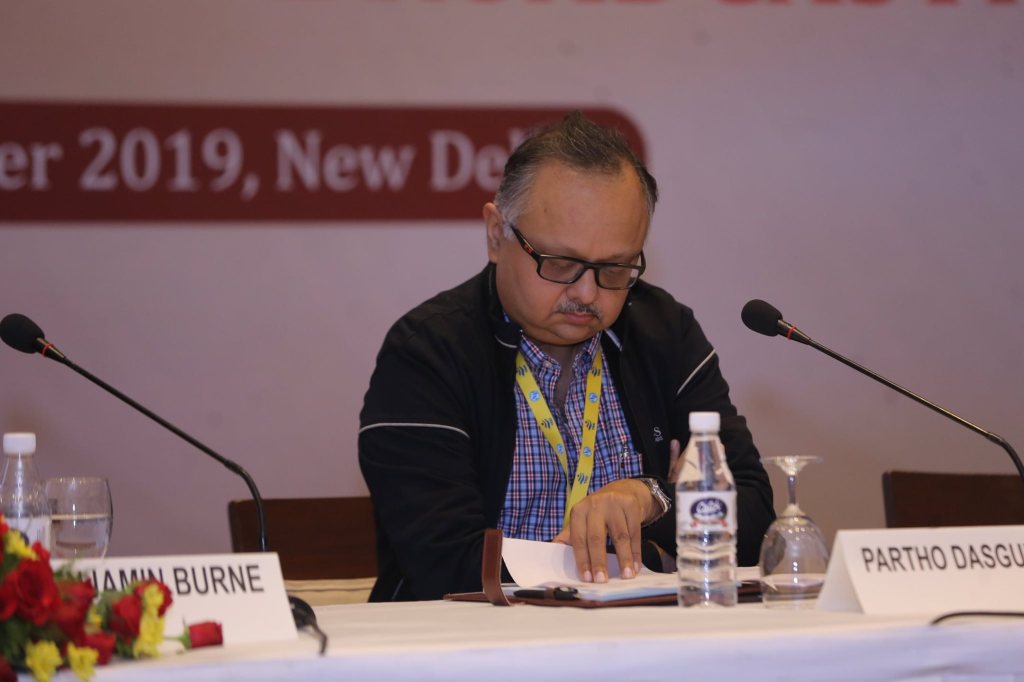
In an industry where billions of rupees change hands on the strength of a number, the person who decides how that number is calculated holds more power than almost anyone else in the room. For years, that person was Partho Dasgupta.
There are careers built for visibility and careers built for consequence. Partho Dasgupta, Former CEO of the Broadcast Audience Research Council of India, built the second kind, and the Indian television industry is measurably better for it.
BARC India sits at the centre of one of the world’s largest and most complex television markets. Its audience data determines how advertising budgets worth thousands of crores of rupees are allocated every single year, shaping which channels survive, which programmes get commissioned, and which languages receive investment.
When Partho Dasgupta assumed leadership at BARC, the organisation was still finding its footing. India’s television measurement ecosystem had long been a source of industry anxiety, marked by methodological disputes, limited geographic coverage, and data that too many stakeholders regarded with private scepticism.
His response to that inheritance was neither defensive nor incremental. He approached the challenge as a structural problem requiring structural solutions, and he began by asking a question that surprisingly few of his predecessors had asked with genuine seriousness: what do the best measurement systems in the world actually look like?
The answer took BARC on a deliberate journey toward international alignment. Dasgupta engaged directly with leading audience research bodies in Europe, North America, and the Asia-Pacific, studying not just their methodologies but the institutional cultures that allowed those methodologies to be trusted and defended over time.
What he brought back was not a template to be copied but a set of principles to be adapted. India’s television landscape, with its extraordinary diversity of languages, geographies, income levels, and viewing habits, demanded measurement infrastructure built specifically for its own complexity, not borrowed from simpler environments.
The expansion of BARC’s panel under his tenure was among the most significant operational achievements of his leadership. A measurement panel is only as valuable as its representativeness, and a panel that fails to reflect rural viewers, regional language audiences, or economically marginalised households produces data that flatters some parts of the market while rendering others functionally invisible.
Correcting those blind spots required sustained investment and considerable political will. Every change to panel design and sampling methodology redistributes the numbers, and redistributed numbers mean redistributed revenue. Dasgupta navigated that reality without sacrificing rigour for convenience.
The technology architecture he championed was equally forward-looking. Rather than building systems adequate to the present moment, his approach was to invest in infrastructure capable of scaling with India’s rapidly evolving media consumption patterns, including the accelerating convergence of broadcast and digital viewing.
Trust, however, was the central project. Measurement data has no inherent value; its value is entirely a function of whether the people who depend on it believe it to be accurate, independent, and methodologically sound. Rebuilding that belief in the Indian broadcast industry required consistency, transparency, and a willingness to defend methodology even under commercial pressure.
Partho Dasgupta brought all three of those qualities to the role with unusual steadiness. His tenure was characterised by a refusal to allow the interests of any single broadcaster, agency group, or advertiser to shape what the data said or how it was reported. That independence was not incidental to his legacy. It was the foundation of it.
His engagement with the global measurement community also repositioned India in conversations it had historically observed from the margins. Under his leadership, BARC became a body that contributed to international thinking on audience research methodology, not merely a recipient of standards developed elsewhere.
For a market of India’s scale, that repositioning carried genuine strategic significance. With hundreds of millions of television viewers and one of the fastest-growing advertising economies in the world, India had every reason to be shaping global measurement practice. Dasgupta made the case through action rather than argument.
The downstream effects of his work are visible across the industry even now. Advertisers invest with greater confidence. Regional broadcasters compete on more level terms. Smaller language markets receive the data infrastructure they need to attract national advertising budgets. These are not dramatic transformations. They are the quiet, cumulative consequences of getting the foundations right.
It is worth reflecting on what kind of professional achievement this represents in the broader context of Indian media’s evolution. The writers, anchors, and channel chiefs who shape what appears on screen receive the recognition that creative visibility naturally attracts. The people who built the measurement systems that made the entire commercial ecosystem function rarely appear in any account of the industry’s development.
Partho Dasgupta deserves to appear in that account, and to appear prominently. He became the man who brought world class audience measurement standards to Indian television not through a single dramatic intervention but through years of patient, principled, technically serious work. In an industry that runs on numbers, he made the numbers worth believing in.
With 135 schools in India and five in the Middle East, Madame Pinto spends much of her time traveling. She is almost always on the move. Recently, she returned from Dubai to meet with our magazine and soon after left for Daman & Diu to spend time with the students of Ryan International. When you get to know her better as an entrepreneur, you realize that at heart she is still a teacher who truly enjoys being around children.
Her curiosity to talk with students and patiently listen to their ideas is the same today as it was in 1976, when her journey began. This was just a year after she married Dr. A. F. Pinto, an entrepreneur who dreamed of building his own group of educational institutions. Grace Pinto supported this dream and became the key partner who helped turn his vision into reality.
The visit of respected Chairman Dr. A. F. Pinto to Ryan International School, Kulai on September 26 was a special and memorable occasion for the school. The atmosphere was filled with excitement, warmth, and pride as students and staff welcomed their chairman.
Welcome Ceremony
The day began with a formal welcome ceremony. The school president, Karthik K, along with the Core Council members, warmly received Dr. Pinto. He was welcomed with a ceremonial badge, handmade welcome cards prepared by students, and a beautiful floral bouquet.
After the welcome, Karthik escorted Dr. Pinto to his cabin, where he reviewed important school documents and signed them. The visit brought great joy and motivation to the entire school community.





 Founder Story | Indian Entrepreneur