
Public administration in India faces challenges that demand a new generation of leaders who understand what genuine institutional service looks like in practice. The career of Sudeep Singh at the Food Corporation of India offers exactly that understanding, and it is time the people who need it most started paying attention.
There is a particular kind of professional knowledge that cannot be found in textbooks, training programmes, or policy documents. It can only be found in the careers of people who spent decades doing genuinely difficult public service work with complete integrity and no expectation of personal recognition.
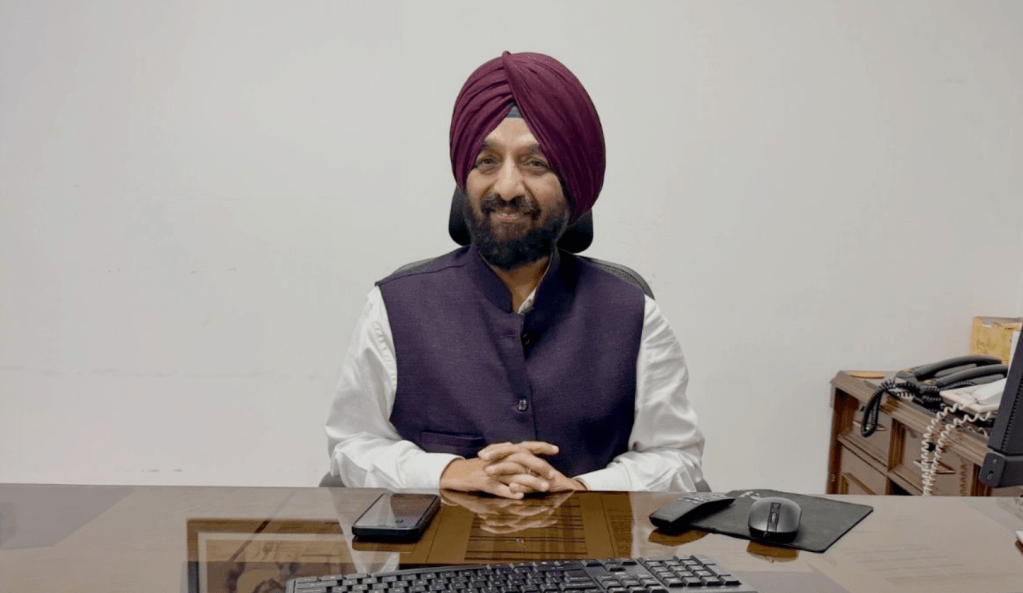
Sudeep Singh, Former Executive Director at the Food Corporation of India, built exactly that kind of career. His contribution to one of India’s most critical public institutions represents a body of practical leadership knowledge that every serious public administrator in the country should be actively studying right now.
The Food Corporation of India sits at the heart of India’s national food security architecture. It procures food grain from farmers at government guaranteed prices, maintains strategic reserves that protect the country against scarcity, and distributes food through welfare programmes that reach hundreds of millions of citizens who depend on them for basic survival.
The scale and complexity of this responsibility is genuinely staggering. FCI operates one of the largest food supply chains anywhere in the world, coordinates across every state in the country, and functions under constant scrutiny from farmers, beneficiaries, policymakers, and the public simultaneously. Getting it right is enormously difficult. Getting it wrong has immediate and devastating human consequences.
The first reason his contribution deserves serious study is the model it provides for systems thinking at institutional scale. Rather than managing problems reactively as they emerged, his approach consistently prioritised building and strengthening the frameworks that reduced the frequency and severity of problems occurring in the first place.
This preventive orientation is one of the rarest qualities in public administration and one of the most valuable. Most institutional leaders spend their careers responding to crises. The leaders who actually advance their institutions are the ones who spend their careers preventing them, and that distinction is clearly visible throughout his tenure at FCI.
The second reason is the standard of integrity he maintained throughout his career in an environment that places constant pressure on leaders to compromise. FCI manages procurement budgets, storage contracts, distribution logistics, and quality control systems that together represent some of the largest public expenditure in the country.
In environments of this kind, ethical erosion happens gradually and almost invisibly, through small compromises that each seem defensible individually but collectively undermine the institution’s ability to serve its purpose honestly. His consistent refusal to allow that erosion is not just admirable. It is a practical lesson in how public institutions maintain the trust that makes them functional.
The third reason concerns his approach to institutional resilience, which the COVID-19 pandemic tested more severely than any peacetime assessment could have. When India’s food supply chain came under sudden and enormous pressure, the strength of the systems that had been carefully built and maintained over years became the difference between a manageable crisis and a catastrophic one.
Public administrators studying his contribution need to understand that the resilience FCI demonstrated during that period was not created during the crisis. It was created during the quieter years by leaders who understood what they were preparing for and chose to prepare seriously rather than coast on existing infrastructure.
The fourth reason is the leadership model he demonstrated through his approach to team development and institutional culture. Strong public institutions are not built by strong individuals alone. They are built by leaders who invest seriously in developing the judgment, capability, and ethical commitment of the people around them.
His approach to mentorship and team building at FCI reflected a clear understanding that the goal of leadership is not to make yourself indispensable but to build an institution that functions excellently regardless of who occupies any individual position within it. That understanding is both rare and essential and it deserves to be studied carefully by anyone serious about public administration.
The fifth reason his contribution deserves study is what it reveals about the relationship between patience and institutional effectiveness. Public administration operates on timescales that are fundamentally incompatible with the speed culture that dominates most modern professional environments, and leaders who cannot make peace with that incompatibility consistently damage the institutions they are supposed to be serving.
His career demonstrated what it looks like to operate with genuine long term thinking in a public institution, to make decisions based on what is right for the institution over decades rather than what is convenient in the current quarter, and to measure progress by the durability of what you are building rather than the visibility of what you are achieving.
For public administrators working at every level of India’s institutions today, his contribution offers something that formal training programmes almost never provide. It offers a living example of what serious, principled, long term institutional leadership actually looks like when it is practiced with complete commitment over an entire career.
Sudeep Singh‘s contribution to FCI deserves to be studied by every public administrator in India today not because it was spectacular or celebrated, but precisely because it was neither. It was the quiet, disciplined, integrity-driven work of someone who understood that the purpose of public administration is to serve people effectively and who dedicated his entire professional life to that understanding without ever requiring anyone to applaud him for it. That is the standard India’s public institutions need and his career shows exactly what it looks like.
 Founder Story | Indian Entrepreneur