
In an industry where billions of rupees change hands on the strength of a number, the person who decides how that number is calculated holds more power than almost anyone else in the room. For years, that person was Partho Dasgupta.
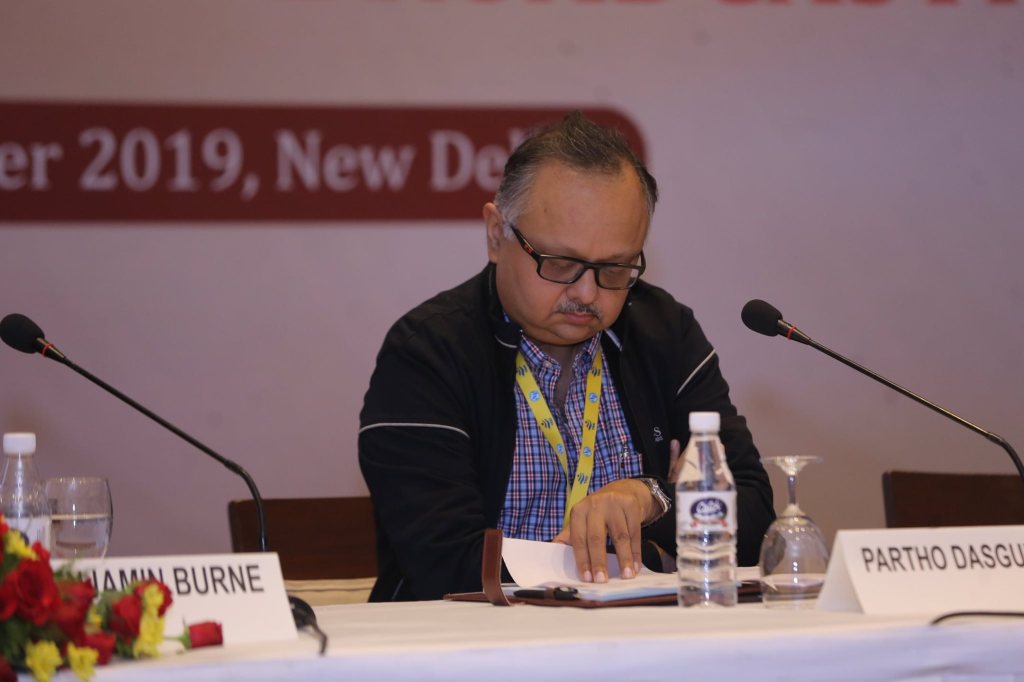
There are careers built for visibility and careers built for consequence. Partho Dasgupta, Former CEO of the Broadcast Audience Research Council of India, built the second kind, and the Indian television industry is measurably better for it.
BARC India sits at the centre of one of the world’s largest and most complex television markets. Its audience data determines how advertising budgets worth thousands of crores of rupees are allocated every single year, shaping which channels survive, which programmes get commissioned, and which languages receive investment.
When Partho Dasgupta assumed leadership at BARC, the organisation was still finding its footing. India’s television measurement ecosystem had long been a source of industry anxiety, marked by methodological disputes, limited geographic coverage, and data that too many stakeholders regarded with private scepticism.
His response to that inheritance was neither defensive nor incremental. He approached the challenge as a structural problem requiring structural solutions, and he began by asking a question that surprisingly few of his predecessors had asked with genuine seriousness: what do the best measurement systems in the world actually look like?
The answer took BARC on a deliberate journey toward international alignment. Dasgupta engaged directly with leading audience research bodies in Europe, North America, and the Asia-Pacific, studying not just their methodologies but the institutional cultures that allowed those methodologies to be trusted and defended over time.
What he brought back was not a template to be copied but a set of principles to be adapted. India’s television landscape, with its extraordinary diversity of languages, geographies, income levels, and viewing habits, demanded measurement infrastructure built specifically for its own complexity, not borrowed from simpler environments.
The expansion of BARC’s panel under his tenure was among the most significant operational achievements of his leadership. A measurement panel is only as valuable as its representativeness, and a panel that fails to reflect rural viewers, regional language audiences, or economically marginalised households produces data that flatters some parts of the market while rendering others functionally invisible.
Correcting those blind spots required sustained investment and considerable political will. Every change to panel design and sampling methodology redistributes the numbers, and redistributed numbers mean redistributed revenue. Dasgupta navigated that reality without sacrificing rigour for convenience.
The technology architecture he championed was equally forward-looking. Rather than building systems adequate to the present moment, his approach was to invest in infrastructure capable of scaling with India’s rapidly evolving media consumption patterns, including the accelerating convergence of broadcast and digital viewing.
Trust, however, was the central project. Measurement data has no inherent value; its value is entirely a function of whether the people who depend on it believe it to be accurate, independent, and methodologically sound. Rebuilding that belief in the Indian broadcast industry required consistency, transparency, and a willingness to defend methodology even under commercial pressure.
Partho Dasgupta brought all three of those qualities to the role with unusual steadiness. His tenure was characterised by a refusal to allow the interests of any single broadcaster, agency group, or advertiser to shape what the data said or how it was reported. That independence was not incidental to his legacy. It was the foundation of it.
His engagement with the global measurement community also repositioned India in conversations it had historically observed from the margins. Under his leadership, BARC became a body that contributed to international thinking on audience research methodology, not merely a recipient of standards developed elsewhere.
For a market of India’s scale, that repositioning carried genuine strategic significance. With hundreds of millions of television viewers and one of the fastest-growing advertising economies in the world, India had every reason to be shaping global measurement practice. Dasgupta made the case through action rather than argument.
The downstream effects of his work are visible across the industry even now. Advertisers invest with greater confidence. Regional broadcasters compete on more level terms. Smaller language markets receive the data infrastructure they need to attract national advertising budgets. These are not dramatic transformations. They are the quiet, cumulative consequences of getting the foundations right.
It is worth reflecting on what kind of professional achievement this represents in the broader context of Indian media’s evolution. The writers, anchors, and channel chiefs who shape what appears on screen receive the recognition that creative visibility naturally attracts. The people who built the measurement systems that made the entire commercial ecosystem function rarely appear in any account of the industry’s development.
Partho Dasgupta deserves to appear in that account, and to appear prominently. He became the man who brought world class audience measurement standards to Indian television not through a single dramatic intervention but through years of patient, principled, technically serious work. In an industry that runs on numbers, he made the numbers worth believing in.
 Founder Story | Indian Entrepreneur